A Guide to Panel-Mount Controllers for Efficient Temperature Management
Understanding Process Temperature Controllers
What is a Process Temperature Controller?
A process temperature controller is a vital device used to maintain and regulate temperature within various industrial applications. These controllers monitor the temperature of a specific process and make adjustments to ensure it remains at the desired set point. They utilize sensors such as thermocouples and other temperature measurement devices to gather real-time data. This information allows the controller to engage heating or cooling mechanisms, ensuring optimal temperature control. In industries ranging from food processing to chemical manufacturing, effective temperature management is crucial for maintaining product quality and operational efficiency.
Key Components of Temperature Controllers
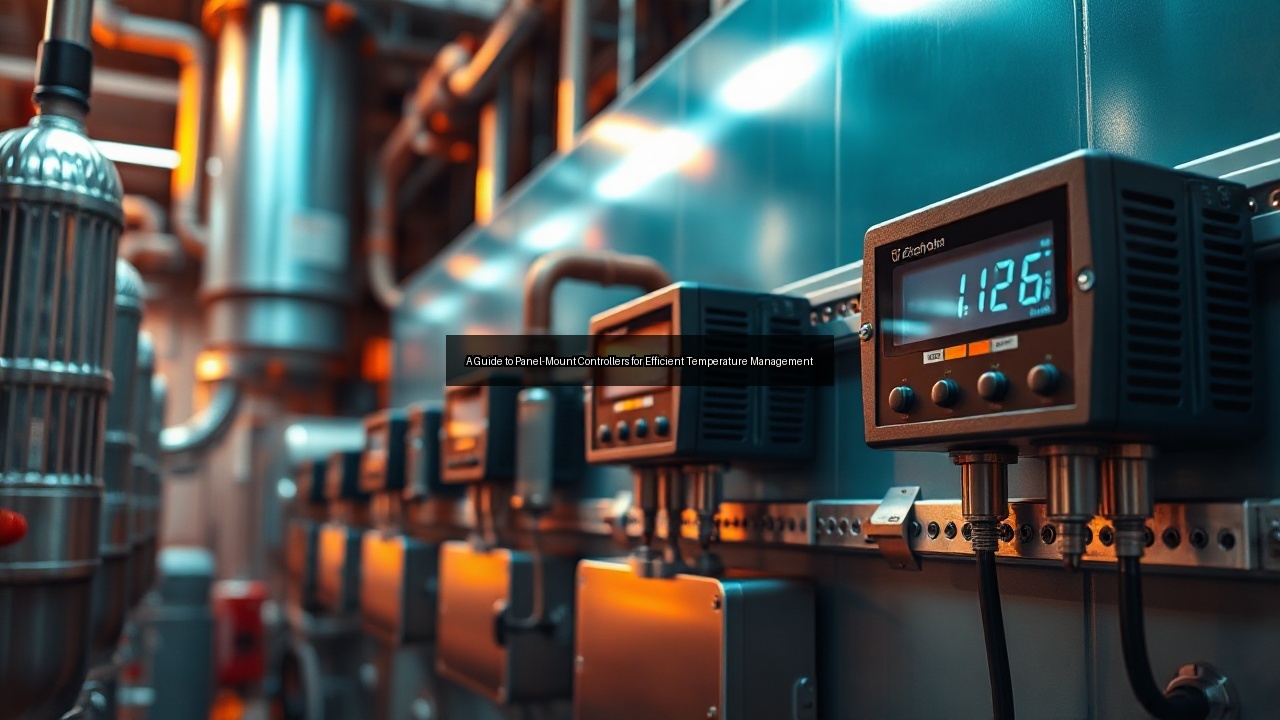
Temperature controllers consist of several key components that work synergistically to achieve precise temperature control. At the core is the controller unit itself, which processes input signals from temperature sensors and compares them to the desired set point. The controller then sends output signals to actuators, which may include heaters, coolers, or other equipment, adjusting their operation to maintain the target temperature. Additionally, display interfaces provide operators with real-time information, including current temperature readings and system status. Other critical components include power supplies, communication interfaces like RS-485 and Modbus for automation integration, and alarm systems that notify users of any deviations from preset parameters.
Types of Temperature Measurement Devices
Temperature measurement devices play a crucial role in ensuring accurate data for process temperature controllers. Common types include thermocouples, resistance temperature detectors (RTDs), and infrared sensors. Thermocouples are widely favored for their broad temperature range and rapid response times, making them suitable for various industrial applications. RTDs offer higher accuracy and stability, particularly in environments with fluctuating temperatures. Infrared sensors provide non-contact measurement, ideal for situations where physical contact with the object is impractical. Each device has its strengths and weaknesses, so selecting the right type depends on the specific requirements of the temperature control application.
Features of Panel-Mount Controllers
Precision and Accuracy in Temperature Control
Precision and accuracy stand as the cornerstones of effective temperature management. Panel-mount temperature controllers are designed to deliver both, ensuring that processes remain within the desired temperature range. These controllers achieve precision through advanced algorithms that fine-tune the control actions based on real-time feedback from temperature sensors. High-quality PID controllers are particularly recognized for DIN-rail controls their ability to maintain stability and minimize overshoot during temperature adjustments. This level of control is essential in applications where even slight temperature variations can lead to significant consequences, such as in pharmaceuticals or semiconductor manufacturing, where product integrity is paramount.
PID Control: The Heart of Effective Temperature Management
PID control, which stands for Proportional, Integral, and Derivative control, forms the backbone of many temperature management systems. This control strategy continuously calculates the error value as the difference between a desired set point and a measured process variable. The PID controller then adjusts the output to minimize this error over time. Proportional control addresses the current error, Integral control focuses on past errors, and Derivative control predicts future errors. Together, these elements provide a robust framework for managing temperature fluctuations with high precision. Industries that implement PID control benefit from enhanced stability and reduced energy consumption, making it a preferred choice for many temperature control applications.
Configurable Inputs and Outputs for Versatility
Modern panel-mount controllers come equipped with configurable inputs and outputs, enhancing their versatility. These features allow users to tailor the controllers to specific applications, accommodating different sensor types and control strategies. For example, a controller might support multiple thermocouple types or RTDs, enabling seamless integration into various systems. Additionally, configurable outputs allow for the control of different types of heating or cooling equipment, including electric heaters and chillers. This adaptability makes panel-mount controllers suitable for diverse applications, from HVAC systems to industrial ovens. Operators benefit from the ability to customize settings, improving overall efficiency and performance in temperature-sensitive processes.
Choosing the Right Controller for Your Needs
DIN-Rail vs. Surface-Mount Options
When selecting a process temperature controller, consider the mounting style: DIN-rail or surface-mount. DIN-rail controllers offer compact designs that fit into standard electrical enclosures, facilitating organized installations in industrial settings. They allow for easy wiring and expansion, making them ideal for applications requiring multiple controllers. Surface-mount options, on the other hand, provide flexibility for installations in locations where space is limited. These controllers often feature larger displays and straightforward user interfaces, enhancing usability. Evaluating the specific requirements of your application and available installation space will guide the decision between DIN-rail and surface-mount controllers.
Evaluating PID Controller Options
Choosing the right PID controller involves assessing several factors, including performance specifications, user interface, and compatibility with existing systems. Look for controllers that offer advanced tuning capabilities, allowing for fine adjustments based on process dynamics. Some PID controllers come with auto-tuning functionality, simplifying the calibration process and ensuring optimal performance. User-friendly interfaces with clear displays enhance operational efficiency, especially in environments with multiple operators. Additionally, ensure compatibility with communication protocols like RS-485 and Modbus for seamless integration into automation systems. Thorough evaluation of these characteristics will help in selecting a PID controller that meets the specific needs of your temperature control application.
Factors to Consider in Industrial Temperature Controls
Several key factors influence the selection of industrial temperature controls. First, consider the temperature range and accuracy requirements of your process. Different applications may necessitate varying levels of precision, so understanding these needs is critical. Next, evaluate environmental conditions, including potential exposure to dust, moisture, or extreme temperatures that could affect controller performance. The ease of installation and maintenance also plays a significant role; controllers with intuitive designs simplify setup and reduce downtime. Finally, look into the manufacturer’s reputation and support services, ensuring access to technical assistance when needed. Thorough consideration of these factors leads to an effective temperature control solution that enhances operational reliability.
Integration and Automation of Temperature Control Systems
Utilizing RS-485 and Modbus for Communication
Integration of temperature control systems into automated environments often relies on communication protocols like RS-485 and Modbus. These protocols facilitate data exchange between controllers and other devices within a network, allowing for centralized monitoring and control. RS-485 supports long-distance communication, making it suitable for large industrial setups. Modbus, a widely used communication protocol, enables interoperability between different manufacturers' devices, enhancing system flexibility. By leveraging these technologies, operators can achieve real-time data access, streamline processes, and implement predictive maintenance strategies. This level of integration not only improves efficiency but also supports proactive decision-making in temperature management. DIN-rail controls
Calibration Techniques for Optimal Performance
Calibration serves as a critical step in ensuring optimal performance of temperature controllers. Regular calibration adjusts the controller's output to match the actual temperature, correcting any discrepancies that may arise over time. Techniques for calibration vary based on the specific type of temperature measurement device used. For thermocouples, reference points and comparison methods are often employed. RTDs may require more precise calibration due to their sensitivity. Implementing a routine calibration schedule is essential for maintaining accuracy and reliability in temperature control systems. This proactive approach minimizes errors, ensuring consistent product quality and operational efficiency.
Temperature and Humidity Control in Automation
Temperature control often goes hand-in-hand with humidity management, particularly in industries like pharmaceuticals and food processing. Automated systems that integrate both temperature and humidity control capabilities ensure optimal conditions for sensitive processes. Humidity sensors complement temperature controllers, allowing for comprehensive environmental control. By utilizing advanced panel-mount controllers equipped with configurable inputs and outputs, operators can maintain precise control over both parameters. This integration prevents issues such as condensation or excessive dryness, which can adversely affect product quality. Investing in technology that supports integrated temperature and humidity control enhances overall process reliability and efficiency in industrial applications.